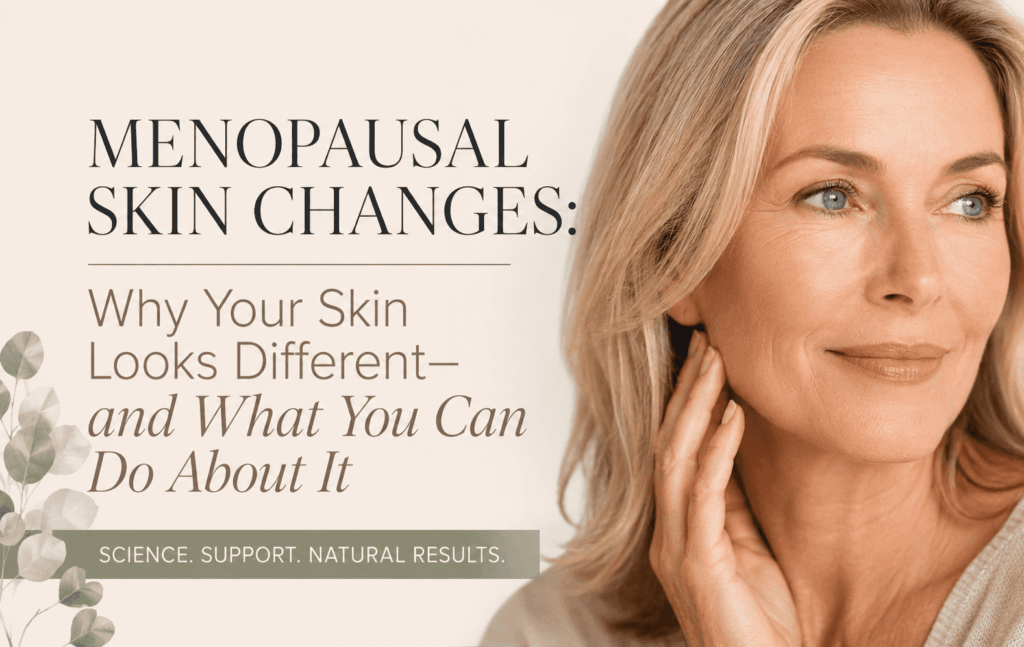
Many women notice that their skin begins to change during perimenopause and menopause, sometimes gradually, and sometimes seemingly overnight. Skin may feel drier, thinner, less elastic, or more fragile than before. Fine lines may become more noticeable, facial contours can shift, and the skincare products or treatments that once worked may no longer deliver the same results.
If this sounds familiar, you are not alone.
These changes are incredibly common, and more importantly, they are not random. Much of what happens to skin during menopause is tied to changing hormone levels, particularly declining estrogen, which plays a major role in collagen production, hydration, skin thickness, and overall skin quality.
Understanding why these changes occur is the first step toward supporting healthier, stronger, and more resilient skin.
Why Does Skin Change During Menopause?
Estrogen does far more than regulate reproductive health. It also helps maintain many of the qualities we associate with youthful, healthy skin. As estrogen levels decline during perimenopause and menopause, several changes begin to occur beneath the surface. Starting with the decline of collagen production. Collagen is the structural protein responsible for skin firmness, strength, and elasticity. Research shows that women can lose a significant amount of collagen during the early menopausal years, contributing to thinner skin and increased laxity. As collagen decreases, skin may appear:- Less firm
- More crepey
- More prone to fine lines and wrinkles
- Less resilient over time
- Dryness
- Tightness
- Flaking
- Increased sensitivity
- A dull or rough texture
- Softening of the jawline
- Increased skin laxity
- Changes around the mouth
- Volume loss in the cheeks or temples
- Heaviness or sagging that feels new or accelerated
Common Signs of Menopausal Skin
Every woman experiences menopause differently, but some of the most common skin concerns include:- Fine lines and wrinkles becoming more noticeable
- Crepey or thinning skin
- Dryness and dehydration
- Loss of firmness
- Dullness or uneven texture
- Increased sensitivity
- Slower healing
- Changes in facial volume and contour
Many women describe feeling as though their skin suddenly no longer reflects how vibrant or healthy they feel internally.
Now, What Can You Do To Help?
Skin health starts from the inside out. While treatments and skincare can play an important role, skin health does not begin with a syringe or a serum alone. The skin is deeply connected to overall health. Hormones, inflammation, nutrition, sleep, stress, and muscle health all influence how skin ages and repairs itself. This is why an “inside-out” approach often creates more meaningful and longer-lasting results. Supporting menopausal skin may include attention to: Nutrition and Hydration Protein, antioxidants, healthy fats, and proper hydration provide many of the building blocks needed for skin repair and collagen support. Sleep and Recovery Skin repair occurs during sleep. Chronic sleep disruption (something many women experience during menopause) can contribute to inflammation and accelerated aging. Strength Training and Longevity Muscle health and circulation influence more than physical strength. Maintaining muscle mass and supporting healthy aging can positively impact overall vitality, posture, and even facial aging over time. Hormonal and Inflammatory Health Because hormones and inflammation influence skin quality, a comprehensive approach often provides the strongest foundation for healthy aging. Hormone Replacement Therapy: Addressing the Root Cause For some women, the changes happening at the skin’s surface are a reflection of what is happening hormonally beneath it. This is where hormone replacement therapy (HRT) enters the conversation, not just as a treatment for hot flashes or sleep disruption, but as a potential tool for supporting skin health during menopause. HRT works by replenishing estrogen (and sometimes progesterone or testosterone) to levels closer to what the body produced before menopause. Because estrogen plays such a direct role in collagen production, skin hydration, and barrier function, restoring healthier hormone levels may help slow some of the skin changes associated with this transition. Research suggests that women using estrogen therapy may experience improvements in:- Skin thickness and firmness
- Collagen density and production
- Moisture retention and barrier integrity
- Overall skin texture and elasticity
It is important to note that HRT is not the right choice for every woman. Individual health history, symptoms, timing since menopause, and personal goals all factor into whether hormone therapy is appropriate. This is a decision best made in close conversation with a qualified healthcare provider who can evaluate your full picture.
Treatments That Can Support Menopausal Skin
There is no one-size-fits-all treatment for menopausal skin. Thoughtful treatment plans can help support the skin’s biology, stimulate collagen, and create natural-looking rejuvenation.
Depending on individual concerns, options may include:
Collagen-Stimulating Injectables
Treatments designed to stimulate the body’s own collagen production, such as biostimulatory fillers, can help improve skin structure, firmness, and elasticity while supporting healthier aging over time.
Skin Tightening Procedures
Energy-based treatments, such as Ultherapy, may support lifting and tightening by stimulating collagen deeper within the skin.
Medical-Grade Skincare
A customized skincare routine can support hydration, barrier repair, pigment correction, and healthy cell turnover.
The most effective approach is often personalized and layered, rather than relying on a single treatment.
Let Us Support Your Skin During This Time
Menopause is a natural transition, but that does not mean women have to simply accept feeling unhappy with their newly changing skin.
Understanding the hormonal and biological changes occurring beneath the surface can help women make informed, empowered decisions about how they care for themselves during this stage of life.
If you are noticing changes in your skin during perimenopause or menopause, a personalized approach that considers both internal health and aesthetic goals can help you feel more confident, refreshed, and supported throughout the process.
Book your consultation today! 305-610-8284
Many women notice that their skin begins to change during perimenopause and menopause, sometimes gradually, and sometimes seemingly overnight. Skin may feel drier, thinner, less elastic, or more fragile than before. Fine lines may become more noticeable, facial contours can shift, and the skincare products or treatments that once worked may no longer deliver the same results.
If this sounds familiar, you are not alone.
These changes are incredibly common, and more importantly, they are not random. Much of what happens to skin during menopause is tied to changing hormone levels, particularly declining estrogen, which plays a major role in collagen production, hydration, skin thickness, and overall skin quality.
Understanding why these changes occur is the first step toward supporting healthier, stronger, and more resilient skin.
The skin is deeply connected to overall health.
Hormones, inflammation, nutrition, sleep, stress, and muscle health all influence how skin ages and repairs itself. This is why an “inside-out” approach often creates more meaningful and longer-lasting results.
Supporting menopausal skin may include attention to:
Nutrition and Hydration
Protein, antioxidants, healthy fats, and proper hydration provide many of the building blocks needed for skin repair and collagen support.
Sleep and Recovery
Skin repair occurs during sleep. Chronic sleep disruption (something many women experience during menopause) can contribute to inflammation and accelerated aging.
Strength Training and Longevity
Muscle health and circulation influence more than physical strength. Maintaining muscle mass and supporting healthy aging can positively impact overall vitality, posture, and even facial aging over time.
Hormonal and Inflammatory Health
Because hormones and inflammation influence skin quality, a comprehensive approach often provides the strongest foundation for healthy aging.
Hormone Replacement Therapy: Addressing the Root Cause
For some women, the changes happening at the skin’s surface are a reflection of what is happening hormonally beneath it. This is where hormone replacement therapy (HRT) enters the conversation, not just as a treatment for hot flashes or sleep disruption, but as a potential tool for supporting skin health during menopause.
HRT works by replenishing estrogen (and sometimes progesterone or testosterone) to levels closer to what the body produced before menopause. Because estrogen plays such a direct role in collagen production, skin hydration, and barrier function, restoring healthier hormone levels may help slow some of the skin changes associated with this transition.
Research suggests that women using estrogen therapy may experience improvements in:
If this sounds familiar, you are not alone.
These changes are incredibly common, and more importantly, they are not random. Much of what happens to skin during menopause is tied to changing hormone levels, particularly declining estrogen, which plays a major role in collagen production, hydration, skin thickness, and overall skin quality.
Understanding why these changes occur is the first step toward supporting healthier, stronger, and more resilient skin.
Why Does Skin Change During Menopause?
Estrogen does far more than regulate reproductive health. It also helps maintain many of the qualities we associate with youthful, healthy skin. As estrogen levels decline during perimenopause and menopause, several changes begin to occur beneath the surface. Starting with the decline of collagen production. Collagen is the structural protein responsible for skin firmness, strength, and elasticity. Research shows that women can lose a significant amount of collagen during the early menopausal years, contributing to thinner skin and increased laxity. As collagen decreases, skin may appear:- Less firm
- More crepey
- More prone to fine lines and wrinkles
- Less resilient over time
- Dryness
- Tightness
- Flaking
- Increased sensitivity
- A dull or rough texture
- Softening of the jawline
- Increased skin laxity
- Changes around the mouth
- Volume loss in the cheeks or temples
- Heaviness or sagging that feels new or accelerated
Common Signs of Menopausal Skin
Every woman experiences menopause differently, but some of the most common skin concerns include:- Fine lines and wrinkles becoming more noticeable
- Crepey or thinning skin
- Dryness and dehydration
- Loss of firmness
- Dullness or uneven texture
- Increased sensitivity
- Slower healing
- Changes in facial volume and contour
Many women describe feeling as though their skin suddenly no longer reflects how vibrant or healthy they feel internally.
Now, What Can You Do To Help?
Skin health starts from the inside out. While treatments and skincare can play an important role, skin health does not begin with a syringe or a serum alone.The skin is deeply connected to overall health.
Hormones, inflammation, nutrition, sleep, stress, and muscle health all influence how skin ages and repairs itself. This is why an “inside-out” approach often creates more meaningful and longer-lasting results.
Supporting menopausal skin may include attention to:
Nutrition and Hydration
Protein, antioxidants, healthy fats, and proper hydration provide many of the building blocks needed for skin repair and collagen support.
Sleep and Recovery
Skin repair occurs during sleep. Chronic sleep disruption (something many women experience during menopause) can contribute to inflammation and accelerated aging.
Strength Training and Longevity
Muscle health and circulation influence more than physical strength. Maintaining muscle mass and supporting healthy aging can positively impact overall vitality, posture, and even facial aging over time.
Hormonal and Inflammatory Health
Because hormones and inflammation influence skin quality, a comprehensive approach often provides the strongest foundation for healthy aging.
Hormone Replacement Therapy: Addressing the Root Cause
For some women, the changes happening at the skin’s surface are a reflection of what is happening hormonally beneath it. This is where hormone replacement therapy (HRT) enters the conversation, not just as a treatment for hot flashes or sleep disruption, but as a potential tool for supporting skin health during menopause.
HRT works by replenishing estrogen (and sometimes progesterone or testosterone) to levels closer to what the body produced before menopause. Because estrogen plays such a direct role in collagen production, skin hydration, and barrier function, restoring healthier hormone levels may help slow some of the skin changes associated with this transition.
Research suggests that women using estrogen therapy may experience improvements in:
- Skin thickness and firmness
- Collagen density and production
- Moisture retention and barrier integrity
- Overall skin texture and elasticity
It is important to note that HRT is not the right choice for every woman. Individual health history, symptoms, timing since menopause, and personal goals all factor into whether hormone therapy is appropriate. This is a decision best made in close conversation with a qualified healthcare provider who can evaluate your full picture.
Treatments That Can Support Menopausal Skin
There is no one-size-fits-all treatment for menopausal skin. Thoughtful treatment plans can help support the skin’s biology, stimulate collagen, and create natural-looking rejuvenation.
Depending on individual concerns, options may include:
Collagen-Stimulating Injectables
Treatments designed to stimulate the body’s own collagen production, such as biostimulatory fillers, can help improve skin structure, firmness, and elasticity while supporting healthier aging over time.
Skin Tightening Procedures
Energy-based treatments, such as Ultherapy, may support lifting and tightening by stimulating collagen deeper within the skin.
Medical-Grade Skincare
A customized skincare routine can support hydration, barrier repair, pigment correction, and healthy cell turnover.
The most effective approach is often personalized and layered, rather than relying on a single treatment.
Let Us Support Your Skin During This Time
Menopause is a natural transition, but that does not mean women have to simply accept feeling unhappy with their newly changing skin.
Understanding the hormonal and biological changes occurring beneath the surface can help women make informed, empowered decisions about how they care for themselves during this stage of life.
If you are noticing changes in your skin during perimenopause or menopause, a personalized approach that considers both internal health and aesthetic goals can help you feel more confident, refreshed, and supported throughout the process.
Book your consultation today! 305-610-8284