
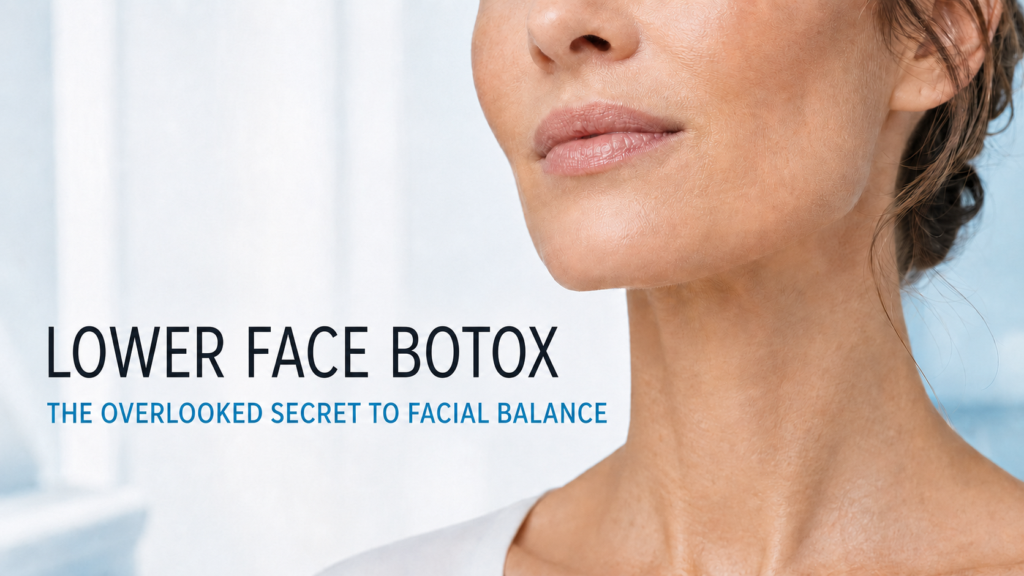
Lower Face Botox: The Overlooked Secret to a More Balanced, Refreshed Appearance
When most people think about Botox, their minds go straight to the upper face: forehead lines, the “elevens” between the brows (frown lines), and crow’s feet at the corners of the eyes. That’s fair, since those were the areas Botox first became famous for treating. But the lower face is often the missing piece in a treatment plan. It’s frequently overlooked, yet addressing it can make a noticeable difference in how balanced, rested, and refreshed the entire face appears.
Why The Lower Face Gets Ignored
Part of it is just awareness. Ask someone on the street to name an area Botox treats and they’ll answer “forehead wrinkles” nine times out of ten. The lower face doesn’t have the same reputation, so it doesn’t come up in conversation the same way.
There’s also a fear factor. The muscles around the mouth, chin, and jawline play an important role in smiling, speaking, eating and expressing emotion. Patients naturally worry that treating these areas could affect their smile or make their face look stiff. That fear is fair. That is why lower-face Botox requires a detailed understanding of facial anatomy and a much more conservative approach than simply following a standard injection pattern. It also requires a skilled injector.
What Can Lower Face Botox Treat?
Lower face Botox can be customized to address several different concerns.
A downturned smile
The DAO (depressor anguli oris) muscles extend from the corners of the mouth toward the jawline. When these muscles are strong, they can pull the corners of the mouth downward and create an unintentionally unhappy or serious expression.
A small amount of neuromodulator can relax this downward pull, allowing the corners of the mouth to rest in a more neutral position.
A pebbled or dimpled chin
An overactive mentalis muscle can cause the chin to appear textured, puckered, or dimpled. Treating this muscle can help the chin look smoother, particularly when speaking or making facial expressions, or even when closing the mouth.
Chin Botox can also complement filler when both muscle activity and facial structure are contributing to the concern.
A less-defined jawline
The platysma is a thin muscle that extends from the lower face into the neck. As it contracts, it can pull downward along the jawline.
Carefully placed injections along the jawline and in the platysmal neck bands can reduce some of that pull and create a subtly cleaner-looking transition between the face and neck. This treatment is sometimes called a “Nefertiti lift,” although it is important to understand that the result is refined rather than surgical.
Lip lines or a disappearing upper lip
Very small amounts of Botox may be used around the mouth to soften certain lip movements or create a subtle lip flip. This can allow more of the upper lip to show without adding filler and reduce the contraction of vertical lip lines.
Because the muscles around the mouth are involved in speaking, smiling, drinking and eating, conservative dosing is especially important.
Why It Changes The Whole Picture
One of the biggest advantages of treating the lower face is that it allows us to look at the face as a whole.
If the upper face is smooth and relaxed, but the lower face continues to pull downward, the result may still feel incomplete. Addressing both areas, when appropriate, can create better harmony from the forehead to the jawline.
That doesn’t mean every patient needs Botox throughout the entire face. A thoughtful treatment plan is based on your individual anatomy, muscle movement, and goals, not a standard injection map.
Lower Face Botox or Dermal Filler?
Botox and dermal fillers both improve the lower face, but they work in very different ways.
Neuromodulators reduce the movement of targeted muscles. Dermal fillers restore or add structure and volume. For example, Botox may help relax a muscle pulling down the corner of the mouth, while filler may support volume loss around the mouth or improve the shape of the chin and jawline.
Some patients benefit from one treatment, while others achieve the best result from a carefully placed combination. The right choice depends on what is actually creating the patient’s concern.
Technique Matters
The lower face is a highly functional area, and the muscles sit close together. Precision is essential.
The muscles in this area are responsible for chewing, talking, smiling, and expressing, so an injector needs a genuinely detailed understanding of facial anatomy to obtain a natural result. Overtreating or placing product in the wrong location can temporarily affect the smile, speech, or other everyday movements. This is why lower face Botox should be performed conservatively and by an experienced injector with a strong understanding of facial anatomy.
At Miami Beach Laser & Aesthetics, our approach is never to chase every line or eliminate all movement. We focus on strategic placement, facial balancing, and results that still look like you, but more refreshed.
Is Lower Face Botox Right for You?
During your consultation, we’ll evaluate your facial movement at rest and in animation to determine whether muscle activity, volume loss, skin laxity (or a combination) is contributing to your concerns.
Lower-face Botox has long been one of the most overlooked injectable treatments, but more patients are beginning to recognize the difference it can make. When used thoughtfully, it can help the entire face appear more balanced, rested and refreshed.
Lower Face Botox: The Overlooked Secret to a More Balanced, Refreshed Appearance
When most people think about Botox, their minds go straight to the upper face: forehead lines, the “elevens” between the brows (frown lines), and crow’s feet at the corners of the eyes. That’s fair, since those were the areas Botox first became famous for treating. But the lower face is often the missing piece in a treatment plan. It’s frequently overlooked, yet addressing it can make a noticeable difference in how balanced, rested, and refreshed the entire face appears.
Why The Lower Face Gets Ignored
Part of it is just awareness. Ask someone on the street to name an area Botox treats and they’ll answer “forehead wrinkles” nine times out of ten. The lower face doesn’t have the same reputation, so it doesn’t come up in conversation the same way.
There’s also a fear factor. The muscles around the mouth, chin, and jawline play an important role in smiling, speaking, eating and expressing emotion. Patients naturally worry that treating these areas could affect their smile or make their face look stiff. That fear is fair. That is why lower-face Botox requires a detailed understanding of facial anatomy and a much more conservative approach than simply following a standard injection pattern. It also requires a skilled injector.
What Can Lower Face Botox Treat?
Lower face Botox can be customized to address several different concerns.
A downturned smile
The DAO (depressor anguli oris) muscles extend from the corners of the mouth toward the jawline. When these muscles are strong, they can pull the corners of the mouth downward and create an unintentionally unhappy or serious expression.
A small amount of neuromodulator can relax this downward pull, allowing the corners of the mouth to rest in a more neutral position.
A pebbled or dimpled chin
An overactive mentalis muscle can cause the chin to appear textured, puckered, or dimpled. Treating this muscle can help the chin look smoother, particularly when speaking or making facial expressions, or even when closing the mouth.
Chin Botox can also complement filler when both muscle activity and facial structure are contributing to the concern.
A less-defined jawline
The platysma is a thin muscle that extends from the lower face into the neck. As it contracts, it can pull downward along the jawline.
Carefully placed injections along the jawline and in the platysmal neck bands can reduce some of that pull and create a subtly cleaner-looking transition between the face and neck. This treatment is sometimes called a “Nefertiti lift,” although it is important to understand that the result is refined rather than surgical.
Lip lines or a disappearing upper lip
Very small amounts of Botox may be used around the mouth to soften certain lip movements or create a subtle lip flip. This can allow more of the upper lip to show without adding filler and reduce the contraction of vertical lip lines.
Because the muscles around the mouth are involved in speaking, smiling, drinking and eating, conservative dosing is especially important.
Why It Changes The Whole Picture
One of the biggest advantages of treating the lower face is that it allows us to look at the face as a whole.
If the upper face is smooth and relaxed, but the lower face continues to pull downward, the result may still feel incomplete. Addressing both areas, when appropriate, can create better harmony from the forehead to the jawline.
That doesn’t mean every patient needs Botox throughout the entire face. A thoughtful treatment plan is based on your individual anatomy, muscle movement, and goals, not a standard injection map.
Lower Face Botox or Dermal Filler?
Botox and dermal fillers both improve the lower face, but they work in very different ways.
Neuromodulators reduce the movement of targeted muscles. Dermal fillers restore or add structure and volume. For example, Botox may help relax a muscle pulling down the corner of the mouth, while filler may support volume loss around the mouth or improve the shape of the chin and jawline.
Some patients benefit from one treatment, while others achieve the best result from a carefully placed combination. The right choice depends on what is actually creating the patient’s concern.
Technique Matters
The lower face is a highly functional area, and the muscles sit close together. Precision is essential.
The muscles in this area are responsible for chewing, talking, smiling, and expressing, so an injector needs a genuinely detailed understanding of facial anatomy to obtain a natural result. Overtreating or placing product in the wrong location can temporarily affect the smile, speech, or other everyday movements. This is why lower face Botox should be performed conservatively and by an experienced injector with a strong understanding of facial anatomy.
At Miami Beach Laser & Aesthetics, our approach is never to chase every line or eliminate all movement. We focus on strategic placement, facial balancing, and results that still look like you, but more refreshed.
Is Lower Face Botox Right for You?
During your consultation, we’ll evaluate your facial movement at rest and in animation to determine whether muscle activity, volume loss, skin laxity (or a combination) is contributing to your concerns.
Lower-face Botox has long been one of the most overlooked injectable treatments, but more patients are beginning to recognize the difference it can make. When used thoughtfully, it can help the entire face appear more balanced, rested and refreshed.